That stubborn stump in your yard isn’t going anywhere on its own, and deciding how to deal with it can feel more complicated than it should be. Two main methods exist: stump grinding and stump removal. While both get rid of the visible eyesore, they work in very different ways and leave behind very different results.
Homeowners often use these terms interchangeably, but they’re not the same service. Grinding breaks the stump down into wood chips below the surface, while removal pulls the entire stump and root system out of the ground. The method you choose affects your budget, your timeline, and what you can do with that patch of yard afterward.
This guide breaks down exactly how each process works, what it costs, and which option makes the most sense for your situation—whether you’re clearing space for a new garden bed or simply want a safer, tidier lawn.
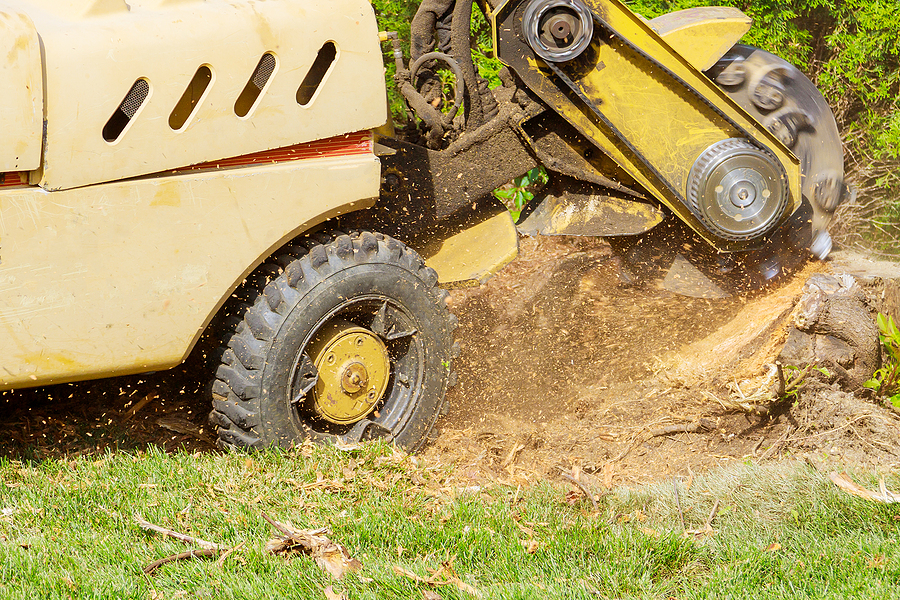
Stump Grinding: What It Is and How It Works
Stump grinding uses a specialized machine to mechanically break down a tree stump into small wood chips. A rotating cutting wheel, fitted with sharp teeth, grinds the wood away layer by layer until the stump disappears below the soil line.
How Deep Does Grinding Go?
Most stump grinding services remove the stump anywhere from 6 to 12 inches below the surface, depending on the stump’s size and your plans for the area. This is typically enough to mow over the spot or plant grass without hitting leftover wood.
The roots themselves stay in the ground and are left to decompose naturally over time. In some cases, this can lead to small sprouts emerging from the root system, particularly if the roots take a while to break down.
Timeline and Costs
Grinding is generally the faster of the two options. A single stump can often be handled in one visit, with the exact time depending on the stump’s diameter and the condition of the wood.
According to Fixr, stump grinding typically costs between $75 and $400 per stump nationally, though prices can exceed $600 for larger or harder stumps with extensive root systems. These figures represent national averages. Your actual cost will depend on your location, so it’s worth getting a local estimate.
Stump Removal: The Complete Extraction Method
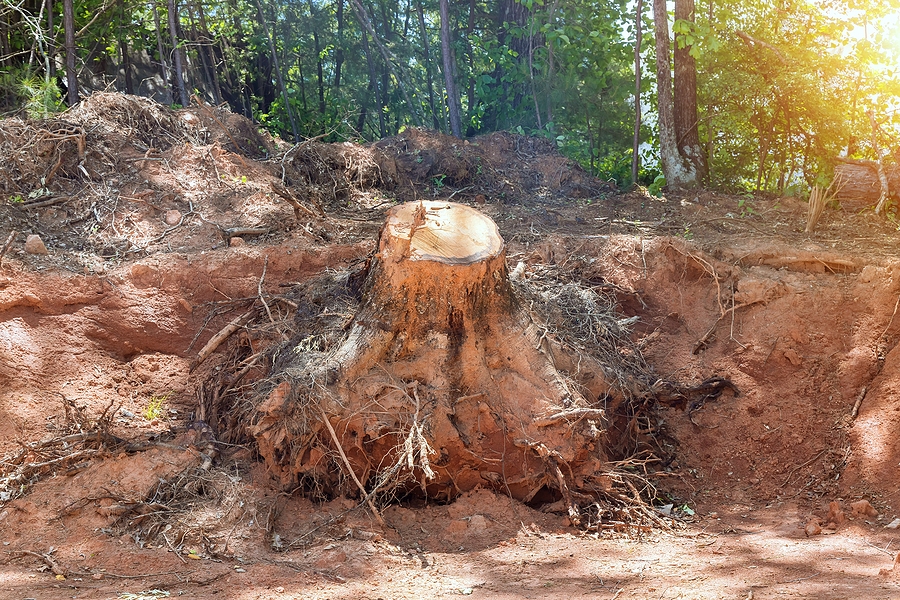
Stump removal takes a more thorough approach. Instead of grinding the wood down, this method physically pulls the entire stump and its root system out of the ground, leaving no trace behind.
The Extraction Process
Removal typically requires heavy equipment, such as an excavator, to dig around the stump and pry the root ball free. This process is more labor-intensive than grinding and leaves a sizable hole that needs to be filled and reseeded once the stump is out.
Because removal eliminates the stump and roots entirely, it’s the preferred method when you’re planning future landscaping, installing a patio or deck, or simply want zero chance of regrowth.
Timeline and Costs
Removal takes longer than grinding due to the excavation work and the backfilling required afterward. The scope of the job depends heavily on the stump’s size, age, and root depth.
Fixr reports that stump removal service typically runs between $370 and $675 for a single 20-inch-diameter stump, with disposal fees sometimes adding another $25 or so. As with grinding, these are national averages, and local pricing can vary based on your region, soil type, and the number of stumps being removed.
Key Differences Between the Two Methods
Cost Comparison and What Affects Pricing
Grinding is almost always the more budget-friendly option. Based on national averages, grinding typically costs $75 to $400 per stump, while removal often runs $370 to $675 for a comparable stump. Pricing for both methods depends on stump diameter, tree age, soil conditions, and root complexity. Many companies also offer discounts when grinding or removing multiple stumps at once.
Time Required for Each Process
Grinding is the quicker service, often completed in a single visit. Removal takes longer because it involves digging, extracting the root ball, and filling the resulting hole—extra steps that add to the overall timeline.
Impact on Your Yard and Landscaping
Grinding is far less disruptive. It leaves the roots intact underground and disturbs only the immediate area around the stump. Removal, by contrast, requires heavy machinery and leaves a large excavation site that needs reseeding or landscaping repair afterward.
Remaining Debris and Cleanup
Grinding produces wood chips and sawdust, which can often be reused as mulch around other plants in your yard. Removal leaves behind a hole that must be backfilled with soil, plus the extracted stump and roots, which need separate hauling and disposal.
Future Growth Potential and Regrowth Risks
This is where the two methods diverge the most. Because grinding leaves the root system in place, there’s a possibility of sprouting as the roots decompose. Removal eliminates this risk entirely since the whole root structure is extracted.
Leaving a stump or its roots in the ground, whether ground down or not, can eventually attract pests like carpenter ants, beetles, and termites, along with fungal growth. Addressing the stump promptly—through either method—helps avoid these issues.
Stump Grinding vs. Stump Removal: Which Should You Choose?
The right choice depends on a handful of practical factors specific to your property and goals.
Budget Considerations
If cost is your primary concern, grinding is typically the more affordable route. It accomplishes the main goal of eliminating the visible stump without the added expense of full excavation.
Timeline and Urgency
For homeowners who want the stump gone quickly, grinding offers a faster turnaround. Removal’s excavation and backfilling process takes more time, which may matter if you’re preparing for an event or seasonal project.
Future Plans for the Yard Space
If you intend to build on that spot, plant new landscaping, or install a patio or deck, removal is the better long-term choice. Grinding works well if you simply want a tidy, mowable yard without major construction plans.
Size and Type of Tree Stump
Larger stumps with extensive root systems can be more complex and costly to fully remove, while smaller stumps may be practical candidates for either method. A professional tree service company can assess the stump’s size, species, and root depth to recommend the best approach.
FAQ
How deep does stump grinding go?
Stump grinding typically removes a stump 6 to 12 inches below the surface, though this can vary based on the stump’s size and the desired outcome for the area.
Can a tree grow back after stump grinding?
Since grinding leaves the roots in the ground, there’s a chance of sprouting as the roots decompose. Full regrowth of the original tree is unlikely, but small sprouts can appear from the remaining root system.
Is stump removal more expensive than grinding?
Yes. National averages show removal typically costs more than grinding, largely due to the heavier equipment and labor involved in extracting the entire root system. Local pricing can vary, so it’s best to request a quote for your specific situation.
How long does stump removal take?
Removal generally takes longer than grinding because it involves excavation, extracting the root ball, and backfilling the hole afterward. The exact timeline depends on the stump’s size and root complexity.
Making the Right Choice for Your Yard
Both stump grinding and stump removal solve the same basic problem, but they take very different paths to get there. Grinding offers a faster, more affordable solution that works well for most homeowners who simply want the stump gone. Removal provides a complete solution for anyone planning future construction or landscaping in that space.
Consider your budget, timeline, and long-term plans for the area before deciding. When you’re ready for an expert assessment, reach out to Timberland Tree Care in Indianapolis, Indiana. Our team can evaluate your stump’s size and condition and help you choose the right solution for your property.
Related Posts:
What is the Easiest Way to Remove a Tree Stump?
3 Common Methods for Getting Rid of a Tree Stump