Hearing the sudden crack of a tree limb outside your window is a sound that instantly triggers alarm. A backyard sanctuary can quickly become a hazard zone when large branches start to fail. Whether it’s a result of a storm, disease, or the mysterious “summer branch drop,” addressing falling limbs is critical for protecting your home and family.
This guide explores why trees shed heavy branches, how to spot the warning signs, and the safest solutions for managing these risks.
TL;DR and Key Takeaways:
- Sudden Failure: Healthy-looking trees can drop limbs on hot, calm summer days due to moisture stress.
- Warning Signs: Look for deep cracks, fungal growth (conks), and “included bark” at branch unions.
- Professional Assessment: An ISA Certified Arborist can determine if the tree needs pruning, cabling, or full removal.
- Safety First: DIY removal of large limbs is statistically dangerous; falls and electrocution are major risks.
Table of Contents:
- Why is my tree dropping large limbs?
- What are the signs a tree branch is about to fall?
- Can you save a tree that is dropping branches?
- Is it safe to remove large tree limbs yourself?
- Frequently Asked Questions
- Quick Recap
- Indianapolis Tree Removal Service
Why Is My Tree Dropping Large Limbs?
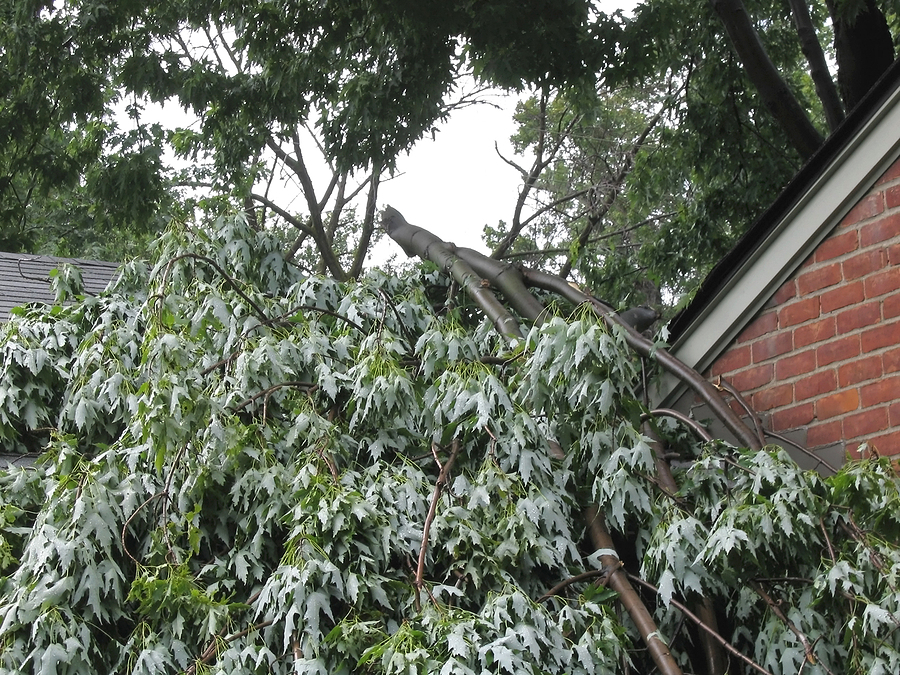
Trees typically drop large limbs due to structural defects, disease, or a phenomenon known as “summer branch drop.” While storm damage is an obvious cause, homeowners are often baffled when a massive limb falls on a calm, sunny afternoon. This is often called Summer Branch Drop (or Sudden Limb Drop).
According to the University of Florida and Arkansas Cooperative Extension Service, this tends to happen on hot, still days. The theory is that trees draw up immense amounts of water to combat the heat, increasing the water weight in the limb until the wood fibers simply snap under the tension.
Other common causes include:
- Structural Defects: Poor branch architecture, such as V-shaped unions where bark gets trapped between stems (included bark), creates weak points that eventually fail.
- Pests and Disease: Borers (like the Emerald Ash Borer) or fungal infections weaken the wood from the inside out, making limbs brittle.
- Root Issues: If the root system is compromised by construction compaction or rot, the tree may shed branches as it struggles to transport nutrients.
What Are the Signs a Tree Branch is About to Fall?
Visible warning signs include deep cracks, fungal conks, deadwood, and codominant stems. Inspecting your trees regularly—especially after storms—can help you catch these defects before gravity takes over.
Purdue Extension identifies several key indicators of potential failure:
- Cracks and Splits: Look for visible cracks where a branch meets the trunk. Any separation in the wood indicates the load-bearing capacity is failing.
- Fungal Conks (Mushrooms): If you see shelf-like mushrooms growing on the bark, it is a strong sign of internal decay. These fungi feed on the wood, leaving it hollow or spongy.
- Deadwood: Branches that are missing bark or have no leaves during the growing season are dead. They are dry, brittle, and guaranteed to fall eventually.
- Included Bark: In a “V-shaped” crotch between two stems, bark can roll inward. This prevents the branches from connecting physically, creating a very weak attachment point.
- Cavities: Large holes or hollows, especially nesting holes for birds, can indicate that the heartwood has rotted away.
Can You Save a Tree That is Dropping Branches?
Yes, many trees can be saved through corrective pruning, cabling, or bracing, provided the main trunk is sound. Dropping a limb doesn’t automatically mean the whole tree must be cut down. The solution depends on the severity of the defect and the “target” (what would be hit if it fell).
- Corrective Pruning: An ISA Certified tree care professional can remove dead or weak branches, reducing the weight on the tree’s structure. This “crown cleaning” minimizes the risk of future drops.
- Cabling and Bracing: For trees with structural weaknesses but high value (like a historic oak), professionals can install high-strength cables or steel rods. These support the weak limbs and limit their movement during high winds.
- Risk Assessment: If the tree is hollow or the rot is extensive, removal may be the only safe option. A professional will perform a tree risk assessment to see if the tree poses an unacceptable danger to people or property.
Is It Safe to Remove Large Tree Limbs Yourself?
No, removing large tree limbs without professional training and equipment is extremely dangerous and often fatal. It might look simple from the ground, but tree work is one of the most hazardous professions in the world. The National Institute for Occupational Safety and Health (NIOSH) reports that falls and electrocutions are leading causes of death in tree trimming.
Here is why DIY is a bad idea for large limbs:
- Gravity is unpredictable: A cut branch can swing back, twist, or bounce in unexpected ways, knocking the ladder out from under you or pinning you against the trunk.
- Electrical Hazards: You don’t have to touch a power line to be electrocuted. Electricity can arc from a line to your pole saw or ladder. Professionals maintain strict “minimum approach distances” that homeowners are often unaware of.
- Equipment Danger: Chainsaws are unforgiving. Using one while balanced on a ladder or up in a tree requires specialized skills and fall-protection gear (saddles, ropes, and harnesses) that most homeowners do not own.
Frequently Asked Questions
Why did a healthy branch fall off my tree?
This is likely “Summer Branch Drop.” It occurs when high temperatures and humidity cause water pressure to build up inside the limb, snapping the wood fibers even if the wood appears healthy and rot-free.
How often should I have my trees inspected?
Purdue Extension recommends a professional inspection every 1 to 5 years, depending on the age of the tree and its proximity to your house or driveway. You should also inspect them immediately after severe weather.
Can a tree heal a broken limb wound?
Trees do not “heal” in the way humans do; they “seal.” They grow specialized scar tissue (callus wood) over the wound to wall off decay. A clean cut made by a professional helps the tree seal effectively, whereas a jagged break from a fallen limb invites rot.
Quick Recap:
- Don’t ignore the signs: Cracks, mushrooms, and V-shaped unions are red flags.
- Summer isn’t safe: Perfectly healthy limbs can snap on hot, still days.
- Keep your distance: If a limb looks shaky, move patio furniture and cars out of the “target zone.”
- Call a pro: Chainsaws and ladders are a deadly mix for untrained homeowners.
Final Thoughts
Trees add immense value and beauty to our properties, but they are large, living organisms that react to their environment in powerful ways. Respecting their size and weight means acknowledging when a job is too big for a Saturday afternoon project. By spotting the warning signs early and relying on professional expertise, you can enjoy your canopy without fearing what might fall from it.
Need help with a dangerous tree? If you are worried about a hanging limb or a tree that looks unstable, don’t wait for the next storm. For professional tree removal and tree trimming in Indianapolis, contact us today to secure your property.
Related Post: Managing Dead Tree Limbs: A Complete Safety Guide